
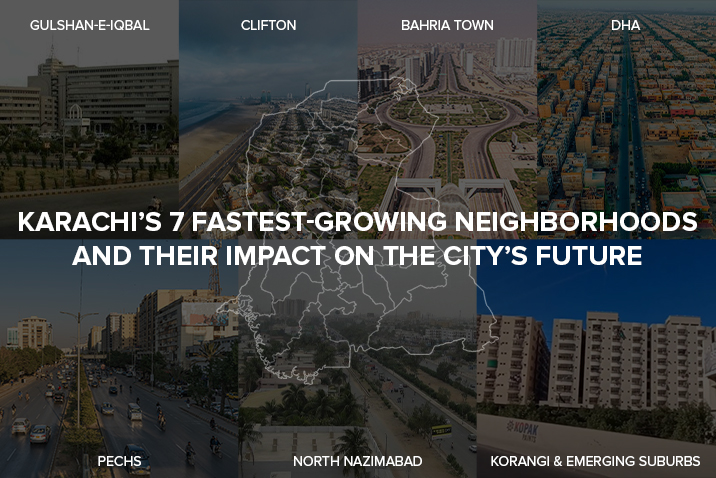
Karachi, Pakistan’s largest metropolis and economic powerhouse, is a city of constant transformation. From bustling commercial hubs to serene residential communities, the urban landscape of Karachi is evolving at an unprecedented pace. Over the last decade, certain neighborhoods have witnessed rapid growth, attracting new residents, investors, and businesses. Understanding these fast-growing areas offers valuable insight into the city’s future development, infrastructure challenges, and lifestyle trends.
In this blog, we explore seven of Karachi’s fastest-growing neighborhoods and what they signify for the city’s future.
1. Gulshan-e-Iqbal: The Residential and Commercial Hub
Gulshan-e-Iqbal has long been one of Karachi’s most sought-after residential areas, but in recent years, its growth has surged. With well-planned residential blocks, proximity to universities, hospitals, and shopping centers, Gulshan-e-Iqbal has become a magnet for middle-class families and professionals. The area’s robust infrastructure, including wide roads and public transport access, makes it attractive to both residents and businesses.
The neighborhood’s growth indicates Karachi’s increasing demand for mixed-use communities – where residential, commercial, and recreational spaces coexist. This trend is shaping a modern cityscape where convenience and accessibility are paramount.
2. Clifton: The Prestige and Lifestyle Epicenter
Clifton remains Karachi’s symbol of luxury, prestige, and lifestyle. Coastal proximity, high-end commercial zones, and elite residential communities continue to drive property demand here. Clifton has evolved beyond a residential area into a commercial powerhouse with malls, offices, and entertainment venues.
The expansion of Clifton reflects Karachi’s growing appetite for luxury living and urban sophistication. Moreover, infrastructure projects, such as road widening and commercial developments, enhance connectivity, making Clifton a prime example of urban modernization.
3. Bahria Town Karachi: Planned Development at Its Best
Bahria Town Karachi represents a modern approach to urban planning, with wide roads, green spaces, security measures, and state-of-the-art amenities. Its growth trajectory is unmatched, attracting investors from across Pakistan and the overseas Pakistani community.
Bahria Town’s development demonstrates the increasing demand for gated communities and self-contained urban environments. The neighborhood’s success also highlights the shift towards organized city planning in Karachi, which could influence other areas to adopt similar models.
4. DHA Karachi: Exclusive Living and Investment Potential
Defence Housing Authority (DHA) Karachi is another fast-growing neighborhood that combines exclusivity with urban convenience. Known for its meticulously planned sectors, modern infrastructure, and commercial hubs, DHA has seen continuous growth in property value and population density.
The expansion of DHA emphasizes Karachi’s real estate potential for long-term investment. It also indicates a shift towards upscale living environments, where security, aesthetics, and accessibility are non-negotiable priorities.
5. PECHS: A Historical Area with Renewed Vibrancy
Pakistan Employees Cooperative Housing Society (PECHS) is one of Karachi’s older neighborhoods, yet it is experiencing renewed growth due to urban densification and commercial expansion. Its central location, proximity to major business districts, and well-connected roads make it a hotspot for both residents and entrepreneurs.
PECHS’ revival signifies a trend where historical neighborhoods in Karachi are being revitalized to meet modern needs. This growth also underscores the city’s challenge of balancing heritage with contemporary development.
6. North Nazimabad: Affordable Residential Growth
North Nazimabad, traditionally a middle-class residential area, has transformed into a sought-after locality due to affordable housing options, proximity to business districts, and improving infrastructure. The area’s steady growth highlights the rising demand for practical and family-friendly living spaces in Karachi.
The neighborhood’s expansion illustrates a broader urban trend: the rise of affordable yet well-connected residential zones, catering to Karachi’s growing population and housing demands.
7. Korangi and Emerging Suburbs: Industrial and Residential Mix
While the previous neighborhoods are primarily residential or mixed-use, areas like Korangi are emerging as key industrial and residential hubs. Industrial growth, proximity to the port, and ongoing residential projects make Korangi a neighborhood to watch. This growth pattern reflects Karachi’s economic diversification and the need for neighborhoods that combine living, working, and industrial spaces.
What These Fast-Growing Neighborhoods Mean for Karachi’s Future
The rapid expansion of these neighborhoods has several implications:
- Urban Planning Challenges: Traffic congestion, water supply issues, and waste management need proactive solutions to sustain growth.
- Real Estate Investment Opportunities: Investors are increasingly attracted to both luxury and affordable housing markets.
- Lifestyle Evolution: The city is witnessing a shift towards modern, convenient, and secure living environments.
- Economic Growth: Neighborhood development spurs commercial activities, creating jobs and boosting local economies.
- Sustainable Urbanization: The success of planned communities like Bahria Town and DHA may encourage more organized urban planning in Karachi.
Final Thoughts
Karachi’s urban landscape is rapidly transforming, and its fastest-growing neighborhoods offer a glimpse into the city’s future. Areas like Gulshan-e-Iqbal, Clifton, DHA, and Bahria Town represent luxury, convenience, and planned growth, while PECHS, North Nazimabad, and Korangi reflect practical, affordable, and industrially integrated urban expansion.
Understanding these neighborhoods is essential for investors, residents, and policymakers alike. They not only indicate the city’s economic vitality but also point towards a future where Karachi becomes more modern, accessible, and strategically developed. As Karachi continues to grow, these neighborhoods will play a pivotal role in shaping the city’s identity, infrastructure, and opportunities for generations to come.
“The Rise of a City Begins with the Rise of its Communities; Strong Neighborhoods Build a Strong Karachi.”