For many businesses, SEO is still treated as something that comes after a website is designed and launched. The focus is placed on visuals first, and only when the site is live does the conversation turn to rankings, traffic, and visibility.
At Digiphix, we take a very different approach.
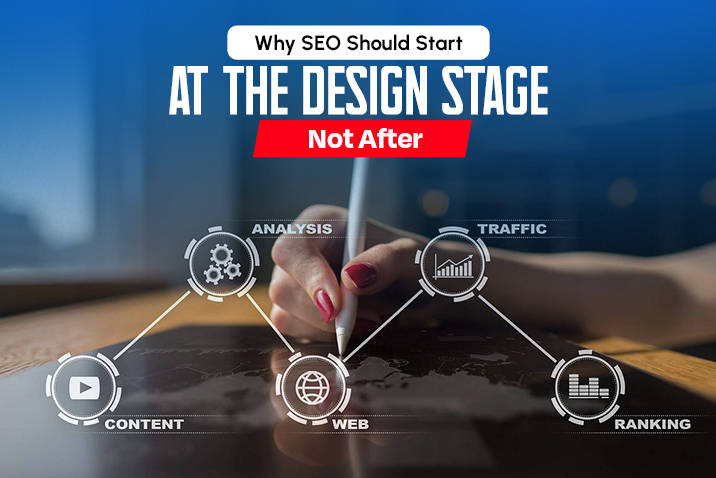
Search engine optimization is not an add-on. It is not a marketing layer you apply once a website is complete. SEO works best when it is planned and integrated at the design stage, long before the first page goes live. When SEO and design work together from the beginning, the result is a website that looks good, functions smoothly, and performs well in search results.
Modern SEO Is Built on Experience, Not Just Keywords
Search engines no longer rank websites based on keywords alone. Google evaluates how users interact with a site, how quickly it loads, how easily people find information, and how smoothly they move from one page to another.
These factors are all influenced by design decisions.
Layout, spacing, navigation structure, page hierarchy, and mobile responsiveness directly affect user experience. If these elements are poorly designed, even the best-written content may struggle to rank. Starting SEO at the design stage ensures that the website is built around both search engine requirements and real user behavior.
Website Structure Is the Foundation of SEO
Before Google reads your content, it reads your website’s structure.
A website designed without SEO planning often has:
- Confusing navigation
- Poor internal linking
- Inconsistent heading structures
- Pages that compete with each other for the same search intent
When SEO is considered from the beginning, each page has a clear role.
- Page hierarchies are logical
- URLs are clean
- Internal linking supports both crawling and user flow.
This makes it easier for search engines to understand the site and rank it accurately.
At Digiphix, we plan site architecture before design layouts are finalized, ensuring that every page serves a defined SEO purpose.
SEO-Led Design Improves User Experience and Engagement
User experience and SEO are deeply connected. A website that is difficult to navigate or slow to load will naturally have higher bounce rates and lower engagement – signals that search engines interpret negatively.
SEO-driven design focuses on:
- Clear content flow
- Readable typography
- Strategic placement of calls-to-action
- Fast-loading pages
When users can find what they need quickly and easily, they stay longer, interact more, and convert better. These positive engagement signals strengthen both SEO and business outcomes.
Mobile-First Design Is Essential for Rankings
Google uses mobile-first indexing, meaning the mobile version of your website is the primary version evaluated for rankings. If SEO is applied after design, mobile optimization often becomes compromised or incomplete.
By integrating SEO during the design phase:
- Mobile layouts are planned intentionally
- Content remains accessible across devices
- Navigation stays simple and intuitive
- Page speed is optimized early
This approach not only improves SEO but also supports GEO strategies by ensuring strong performance in local and regional searches, where mobile usage is dominant.
Design Plays a Key Role in AEO and AI Search Visibility
As search evolves, Answer Engine Optimization (AEO) is becoming increasingly important. AI-powered search tools and voice assistants rely on clearly structured, easily extractable information.
SEO-first design allows content to be:
- Organized into clear sections
- Supported by proper heading hierarchy
- Positioned for featured snippets and quick answers
Designing pages with AEO in mind ensures that your content can be understood not just by users, but also by AI-driven search systems. This is no longer optional; it is a competitive advantage.
SEO at the Design Stage Saves Time and Cost
Adding SEO after a website is launched often means going back and fixing fundamental issues. This can include restructuring pages, rewriting URLs, adjusting layouts, or even redesigning sections entirely.
Starting SEO at the design stage:
- Reduces rework
- Shortens time to ranking
- Lowers long-term costs
- Creates a scalable foundation for future growth
At Digiphix, we believe in building websites that are future-ready, not temporary solutions that require constant correction.
Digiphix’s SEO-First Design Philosophy
Our process begins long before visuals are finalized. We start by understanding search intent, audience behavior, and business goals. From there, we plan page structure, content placement, and navigation paths that support both SEO and user experience.
Design and development then follow a clear strategy, ensuring performance, accessibility, and scalability are built into every page.
This integrated approach allows our clients to launch websites that are optimized from day one; not months later.
Final Thoughts
SEO should never be treated as an afterthought. When it is embedded into the design stage, it becomes part of the website’s foundation rather than a patchwork solution.
At Digiphix, we believe the strongest websites are created when design, SEO, and user intent are aligned from the very beginning. This is how websites rank better, perform better, and deliver long-term value.
If your goal is sustainable growth, stronger visibility, and meaningful conversions, SEO must start at the design stage – not after.